
Learn · Getting started
Why checking your money feels so draining.
The world has gotten very good at stealing your attention. Here's why a quick money check turns into 30 minutes of friction, and how to get it down to a five-minute checkup a day so you can put the phone down and go live your day.

Joshua Humada, CRPC®, AAMS®
Founder, MoneyYogi
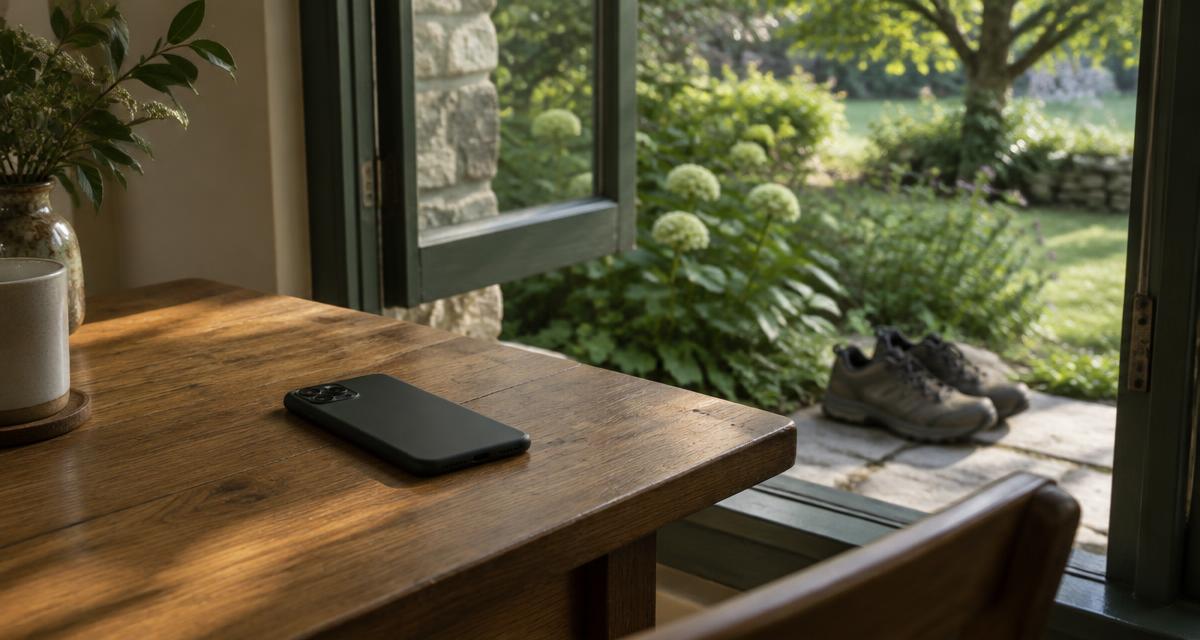
You came for clarity and left with distraction
You unlock your phone with a simple goal. Check your balance, see what cleared, get on with your day. But before you even open the bank app, there are three red badges, two news alerts and a group text. By the time you've worked through a couple of logins and waited on a two-factor code, your focus is gone.
That's not a discipline problem. It's a friction problem. When managing money takes 30 minutes of friction, you put it off. And when you put it off, the not-knowing is what actually creates the stress.
Here's how I look at it. Technology has one real job: help you operate better out here in the physical world. Be more functional, have more peace of mind, then get out of the way. That goes for your health, your money, all of it.
Put everything in one holistic space.
Every separate login is another door you have to walk through. Connect your checking, savings, cards, loans and investments into one place with a read-only connection, so there's only one thing to open. That alone takes most of the friction out.
Let the sorting happen on autopilot.
If you have to categorize every transaction by hand, the habit breaks the first busy week. Let transactions sort into buckets automatically, fix a mistake once, and let that fix become a rule. Your job is to look, not to type.
Pick the two or three numbers you actually check.
You don't need thirty charts. For most people it's money in, money out, and whether anything looks off. Know what you're looking for before you open the app so you can find it and close it.
Guard the path from your phone to your money.
Turn off the notifications that don't matter, and keep your money app away from the screen with your social apps. The fewer things fighting for your attention on the way in, the less likely you are to get pulled away.
Do the five-minute checkup, then close it.
Open it, see where you stand, and put the phone back in your pocket. Save the bigger decisions for a calmer weekly or monthly sit-down. Less screen time, less noise, more real life.
What changes when the friction is gone
When it happens on autopilot and in one holistic space, checking your money stops being a chore you dread. You take five minutes, you know exactly where you stand, and you get back to the people and things that actually matter to you.
The goal was never more time staring at a screen. It's less, and feeling better about the time you do spend.
This content is for education purposes only and is not personalized advice.
Common questions
Why do I avoid checking my bank accounts?
Usually it isn't the number, it's the friction. When a simple check means several apps, passwords, codes and notifications pulling at you, your brain files it as a chore and puts it off. Lower the friction and the avoidance tends to fade with it.
How long should a money check-in take?
For a quick daily checkup, about five minutes is plenty: what came in, what went out, and anything that looks off. A longer review once a week or once a month is where you make adjustments.
How do I stop getting distracted when I open my phone to check my money?
Go straight to one place that already has everything in it, check the few numbers you care about, and close it. Turning off non-essential notifications and keeping your money app off the same screen as social apps helps a lot too.
Is it safe to see all my accounts in one app?
Look for a read-only connection through a provider like Plaid, where the app sees balances and transactions but never your bank password and can't move money. MoneyYogi is read-only by design.
About the author
Joshua Humada, CRPC®, AAMS®
Joshua Humada is the founder of MoneyYogi and an investment advisor representative of Money Holistics, an investment advisor. He works one on one with a limited number of clients and built MoneyYogi to give everyone else the same calm, complete view of their money.
Five minutes a day, then back to your life.
Connect your accounts once and see your whole picture in one calm place.
Start your trial